


What Web Summit Vancouver 2026 clarified for mission-driven organizations
I attended Web Summit Vancouver 2026 this week, and what stayed with me was not only the scale of the event or the pace of the AI conversation. It was the seriousness of the people I met: founders, nonprofit leaders, women in tech, CEOs, investors, and ecosystem builders thinking carefully about how technology can be used with more intention, responsibility, and real-world value.
The signal I left with was clear: AI is no longer the conversation on its own. It is becoming part of the operating environment every organization now has to navigate.
That distinction matters.
For the past year or two, many organizations have been asking, “How do we start using AI?” That was the right question at the beginning. It helped leaders experiment, learn, test tools, and understand what was possible.
From conversations I had with people who attended Web Summit last year, a comparison point emerged: last year’s AI conversation seemed more focused on experimentation and possibility.
This year felt more disciplined. The question had moved from “how do we start?” to “how do we make this useful, responsible, and measurable?”
The conversation has moved from possibility to readiness. From tools to systems. From curiosity to accountability. From “What can AI do?” to “Do we have the leadership, structure, governance, context, and operational discipline to use it well?”
That is the part mission-driven organizations need to pay attention to.
The signal was bigger than AI
According to Web Summit’s official recap, Web Summit Vancouver 2026 brought together 20,235 attendees, 1,197 startups, and 768 investors from more than 100 countries. Attendance was up nearly 30 percent from last year’s edition, and investor turnout was up 13 percent. The event also hosted government and trade delegations and major exhibitors including Microsoft, AWS, Cloudflare, Google, IBM, and Dell Technologies.
That scale matters because it shows where the market is concentrating attention.
But scale was only part of the story. What mattered just as much were the conversations happening around that scale. I met people working across sectors who were asking better questions than “what can this technology do?” They were asking how it should be designed, who it should serve, what risks need to be understood, and how collaboration can make the work stronger.
That is an important distinction for mission-driven organizations. Responsible innovation does not happen in isolation. It depends on context, partnership, trust, and the willingness to design around real people and real operating conditions.
The stronger signal was not that AI is growing. It was that AI is being pulled into every serious conversation about business models, public policy, infrastructure, capital, workforce design, privacy, trust, creativity, and operational efficiency.
In other words, AI is no longer sitting beside strategy. It is becoming embedded inside strategy.
The sharper takeaway for me was that context is becoming the real differentiator.
AI agents, workflows, and tools do not become useful simply because they are powerful. They become useful when they are given the right context: the organization’s priorities, constraints, stakeholder realities, data boundaries, service model, funding environment, risk profile, and human judgment.
That context is not abstract. It lives in the people closest to the work: the teams managing delivery, the leaders making trade-offs, the boards carrying oversight, the partners navigating shared outcomes, and the communities whose trust ultimately determines whether an innovation is adopted, resisted, or meaningfully useful.
That matters deeply for mission-driven organizations. A generic AI solution may create speed. But speed without context can create noise, risk, or misalignment. Sector-specific and organization-specific context is what turns AI from a tool into a useful operating capability.
My biggest takeaway: execution is now the differentiator
The organizations that will benefit most from AI will not necessarily be the ones using the most platforms.
They will be the ones with enough clarity to know:
-
- What problem they are solving.
- Where AI should support the work.
- Where human judgment must remain central.
- What data, privacy, and governance standards are required.
- How success will be measured.
- What needs to change in the operating model.
That is where many mission-driven organizations are still exposed.
There is a real risk that AI gets treated as a shortcut. A drafting tool. A productivity hack. A way to move faster without addressing the deeper issues underneath: unclear priorities, weak systems, fragmented data, overloaded teams, outdated workflows, and decision-making structures that were already under strain before AI entered the picture.
AI will not fix those issues automatically. In many cases, it will expose them faster.
This is where human-centric design becomes practical, not philosophical. In a mission-driven organization, humans are not simply “users” of AI. They are the source of the context that makes the system responsible and useful. Staff understand the operational friction. Leaders understand the trade-offs. Boards understand the risk and accountability lens. Communities and clients understand what trust actually requires.
If that human context is missing, the system may still function, but it will not necessarily serve the mission well.
Government and policy were part of the signal
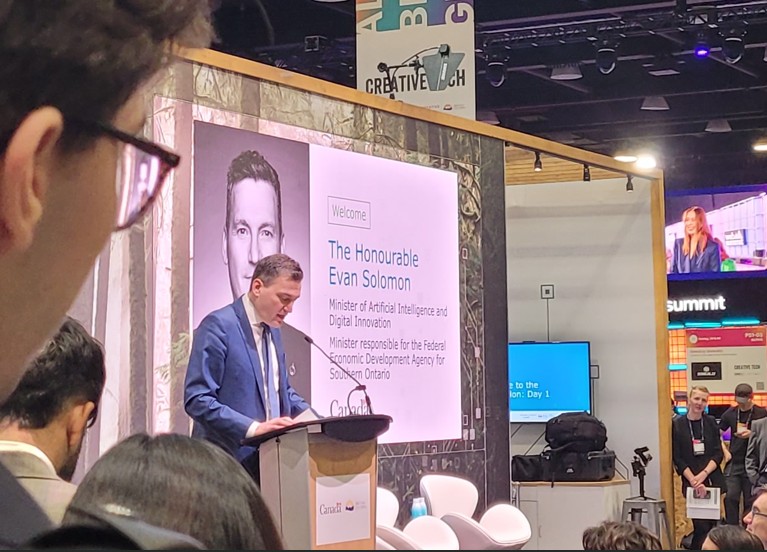
One of the more important takeaways for me was how visible the policy-side signal was, not only through the presence of policymakers, government leaders, and trade delegations, but through Web Summit’s own Government Summit track.
That track is explicitly framed around politics, innovation, and regulation, with global leaders examining how technology intersects with democracy, trust, ethics, society, and public leadership. That matters because it positions technology as more than a private-sector growth story. It places AI and emerging technology inside the broader questions of governance, accountability, public trust, and institutional responsibility.
For mission-driven organizations, that framing is important. Many work with government, depend on public funding, operate in regulated environments, manage sensitive data, or serve communities where trust is central. In that context, responsible technology adoption cannot be separated from policy, partnership, and public accountability.
It also reinforces the need for stronger partnership across sectors. No single organization, funder, government body, or technology provider can solve these questions alone. The work requires shared language, clearer accountability, and more intentional collaboration between the people building tools and the people living with their consequences.
Governance also has to be showable. It is not enough to say AI is being used responsibly. Organizations need to be able to explain who is using it, for what purpose, under what rules, with what oversight, and where human accountability sits.
The question is not simply, “Can we use AI?” The better question is: “Can we use AI in a way that is useful, responsible, explainable, and aligned with the trust people place in us?”
That is a much higher bar. It is also the right one.
The capital signal was also clear
The investor presence at Web Summit Vancouver 2026 was significant, with the largest investor turnout the North American edition has seen.
For mission-driven organizations, that may seem distant at first. Many are not venture-backed. Many are not trying to scale like startups. Many are working with constrained budgets, public accountability, and complex stakeholder expectations.
But the capital signal still matters.
Markets are rewarding organizations that can show focus, traction, clarity, and credible execution. Web Summit’s New Venture Summit framing pointed to investors becoming more focused on fewer, stronger opportunities where there is already evidence of promise. That logic applies beyond startups.
Funders, partners, boards, governments, and customers are increasingly looking for the same things: evidence that an organization understands its operating environment, knows where it is going, can make disciplined decisions, and can translate ambition into measurable results.
That is the crossover point for SMC’s work.
Clarity is not abstract. It affects funding. It affects partnerships. It affects trust. It affects whether an organization can move from scattered effort to focused execution.
For mission-driven leaders, the real question is readiness
The practical takeaway is not that every organization needs an AI strategy tomorrow.
The practical takeaway is that every organization needs to understand how AI, digital infrastructure, governance, data, people, and operating priorities fit together.
That starts with better questions:
-
- Where are we already using AI informally?
- Where could AI create real value, not just speed?
- What context would an AI tool or agent need before it could make a useful recommendation?
- What work should remain human-led because trust, judgment, empathy, or accountability cannot be delegated?
- What risks are we introducing without realizing it?
- What policies, workflows, and decision rights are missing?
- Who is responsible for editing, validating, and refining AI-supported work over time?
These are not technology questions alone. They are leadership questions. They are governance questions. They are operational questions.
And for many organizations, they are becoming urgent.
What I am taking back into my work
The phrase I kept coming back to after the conference was this:
AI is the baseline. Execution is the differentiator. Governance is the enabler. Context is the advantage.
And people are what make that context useful, responsible, and real.
That was the human thread running underneath the technology conversation for me. AI agents, tools, and systems may be powerful, but they still depend on people to define the problem, shape the context, test the outputs, challenge assumptions, and decide what should remain human-led.
That context has to be designed with intent. It has to be edited, tested, refined, and grounded in the real operating environment of the organization. This is where mission-driven leaders have an opportunity: they can adopt technology intentionally and responsibly, in a way that reflects their purpose, their people, and their accountability to the communities and stakeholders they serve.
For Social Mission Canada’s clients and community, I would add one more layer:
Clarity is the starting point.
Without clarity, organizations chase tools. With clarity, they make better decisions about what matters, what to build, what to stop, what to protect, and where to focus limited time, money, and leadership attention.
In practice, that might mean defining which problems AI should and should not touch, who reviews AI-supported decisions, what data is appropriate to use, and where human judgment must remain non-negotiable.
The bigger question I left with was this: how do we scale innovation without losing our ethical compass?
For mission-driven organizations, that is not a theoretical question. It shows up in how we use data, how we protect trust, how we design tools, how we involve communities, and how we decide what should remain human-led.
That is the work ahead.
For mission-driven organizations, the opportunity is not to follow the technology conversation blindly. The opportunity is to translate it into responsible, practical, organization-specific decisions that strengthen the mission instead of distracting from it.
Let’s continue the conversation
If this reflects what you are seeing inside your organization, or if you are also trying to make sense of how technology, trust, governance, and mission now fit together, I would welcome a thoughtful exchange about what you are noticing, what you are trying to clarify, and where stronger context, partnership, or operating discipline may help your mission and organization move forward with more focus and confidence.
That is the kind of work Social Mission Canada is built for: helping mission-driven organizations navigate complex inflection points with clearer priorities, stronger systems, better governance, and decisions that are grounded in the organization’s real context.
Because in this next phase, the organizations that move well will not be the ones chasing every new tool. They will be the ones clear enough to know what matters, disciplined enough to design around it, and human-centered enough to use technology without losing sight of trust, accountability, and purpose.
If you want to continue the conversation, let’s talk.